

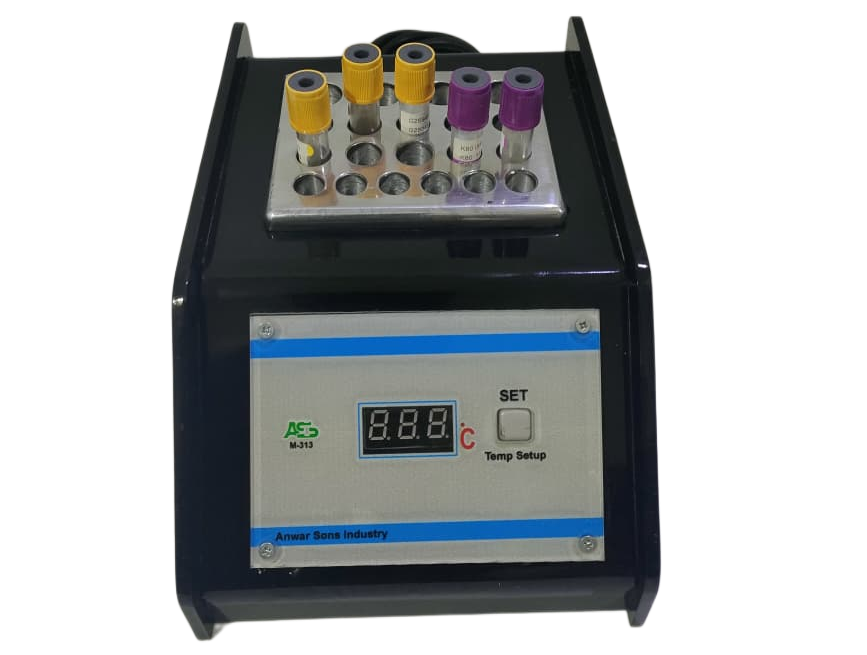
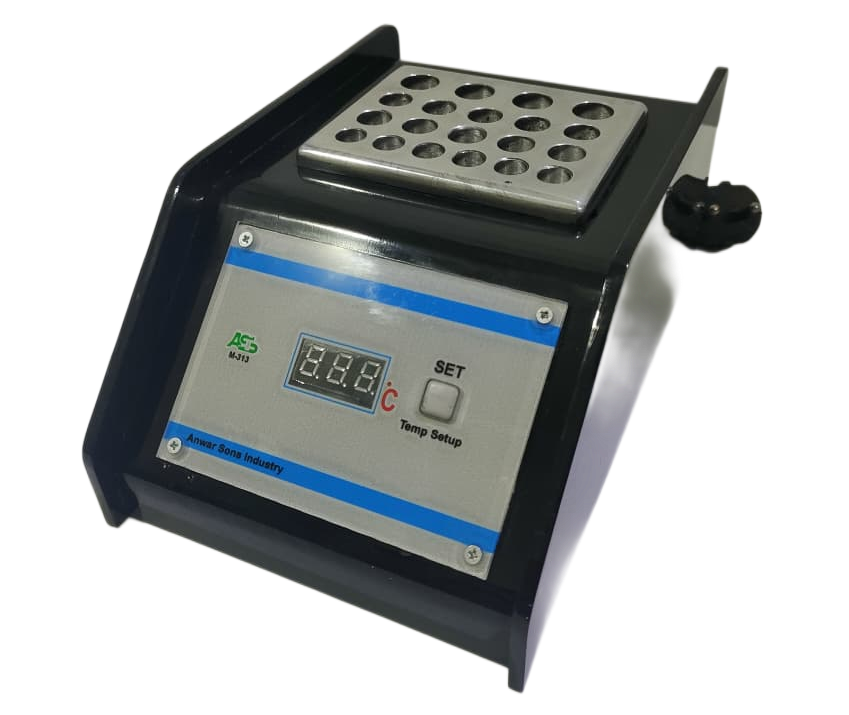
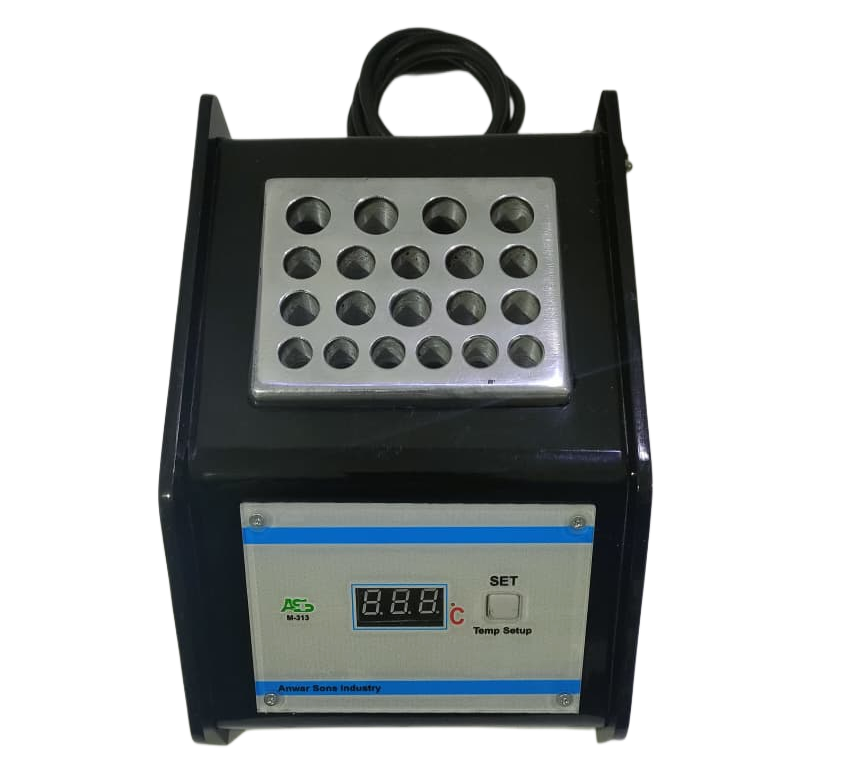
Dry Bath
- Model / Type: Dry Bath
- Capacity: Can hold up to 20 tubes simultaneously using various inserts.
Physical Dimensions
- Length: 260 mm
- Width: 135 mm
- Height: 113 mm
Weight
- Net Weight: 2.100 kg (device only)
- Gross Weight: 2.600 kg (including packaging)
Construction Material
- Body: Acrylic Sheet (likely the exterior casing)
- Heating Block: Aluminium (excellent for even heat distribution)
Electrical Specifications
- Power Source: 220V, 60 Hz
- Power Consumption: 40 Watts
- Special Feature: Energy Saver Product
Block Configuration
The unit includes a heating block with a combination of holes for different tube types:
- 4 Holes for Conical Tubes
- 10 Holes for Vacutainer Tubes (13×75 mm)
- 6 Holes for Serum Capsules (1.5–2.0 ml capacity)
Key Inferences
- Primary Use: Designed for laboratory heating tasks such as sample incubation, elution, inactivation, and reagent heating.
- Versatility: Accommodates Conical Tubes, Vacutainers, and Serum Capsules, making it useful for clinical, biomedical, and research labs.
- Target Audience: Laboratory technicians, researchers, and scientists in molecular biology, biochemistry, and clinical diagnostics.
- Efficiency: Low power consumption (40W) and “Energy Saver” designation ensure cost-effective and eco-friendly operation.
Dry Bath
A Dry Bath, also known as a block heater or dry block incubator, serves a similar purpose to a water bath but heats samples in air within a solid metal block. The block has precisely machined wells that perfectly fit common tube sizes (0.5ml, 1.5ml, 15ml, etc.), providing excellent thermal contact without the use of water.
This device is preferred for many clinical applications because it eliminates water contamination and reduces the risk of a sample tube leaking and cross-contaminating other samples. It heats up rapidly and holds a highly accurate, uniform temperature. In blood bank and molecular biology settings, dry baths are used for incubation steps, sample thawing, and enzyme reactions where a moist environment is undesirable.
