

Water Bath
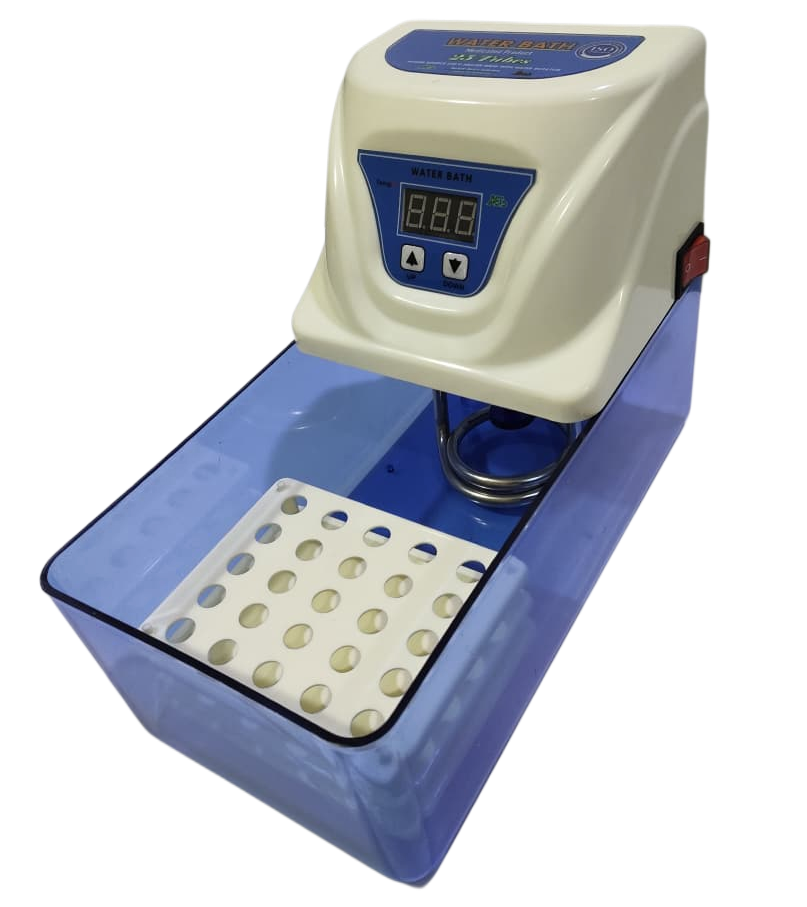
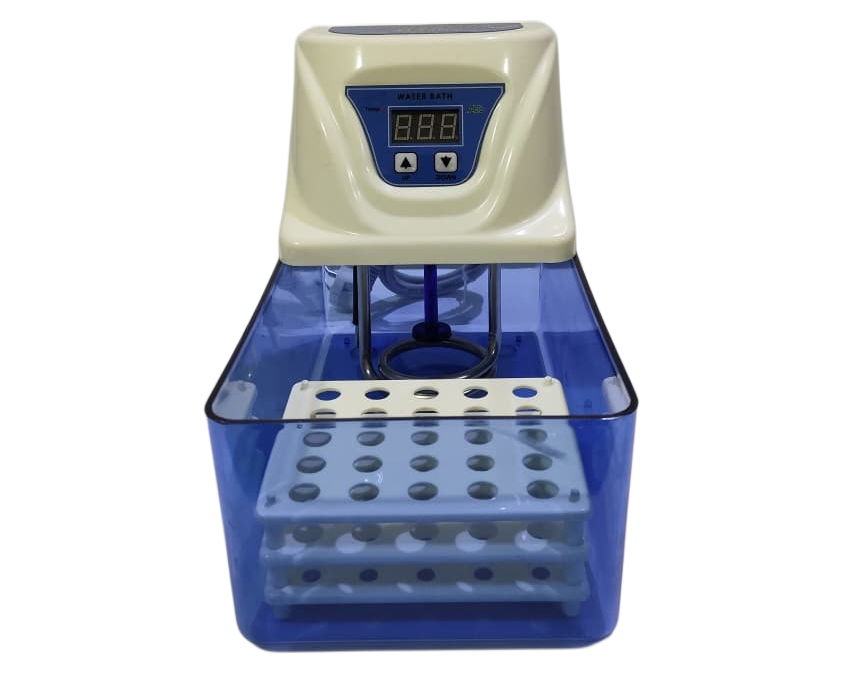
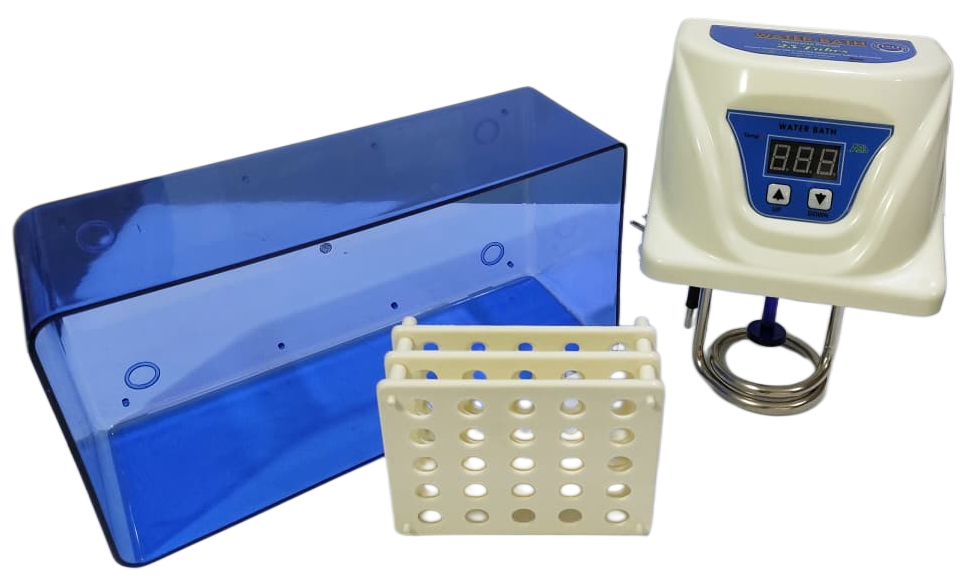
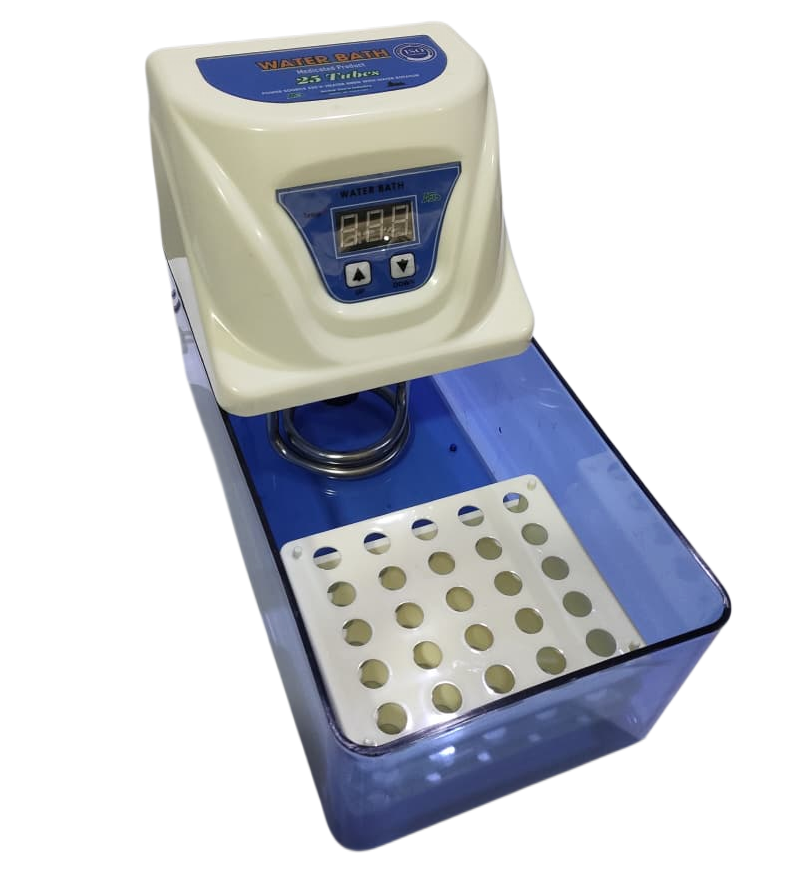
The Water Bath is a laboratory instrument used to incubate samples in test tubes at a constant temperature. It works by surrounding the tubes with heated water, providing a uniform and stable thermal environment. This model has a capacity for 25 tubes and includes a water rotation feature for even heat distribution.
Detailed Specifications
- Model / Type: Water Bath
- Capacity: Can hold and heat up to 25 test tubes simultaneously
Physical Dimensions
- Length: 305 mm
- Width: 165 mm
- Height: 230 mm
Weight
- Net Weight: 1.700 kg (device only)
- Gross Weight: 2.900 kg (including packaging)
Electrical Specifications
- Power Source: 220V, 60 Hz
- Power Consumption: 500 Watts
- Special Feature: Energy Saver Product
Bath Specifications
- Water Capacity: Approximately 3 Liters required for operation
- Key Feature: With Water Rotator (circulator/stirrer) for uniform temperature distribution and prevention of hot/cold spots
Key Inferences
- Primary Use: Suitable for laboratory applications requiring precise temperature control, including culture incubation, reagent warming, enzymatic reactions, and fibrinolysis studies.
- Superior Performance: The built-in water rotator enhances temperature uniformity, providing more reliable and reproducible experimental results.
- Target Audience: Scientists, laboratory technicians, and researchers in microbiology, biochemistry, and clinical diagnostics.
- Efficiency: Despite 500W heating power, its Energy Saver design minimizes heat loss for efficient and cost-effective operation.
Water Bath
A laboratory Water Bath is an instrument used to incubate samples in water at a constant temperature over a long period. It consists of a stainless steel or glass tank filled with distilled water, a heating element, and a temperature control system, usually a digital PID controller for precise stability.
In clinical and blood bank settings, water baths are used to warm reagents, thaw plasma (in basic models), incubate serological tests, and inactivate complement. The temperature range can typically be set from a few degrees above ambient up to 100°C. A lid prevents evaporation and maintains temperature uniformity. It is an indispensable general-purpose appliance in almost every diagnostic laboratory.
